
Commissioned Installation, Manchester, 2016
The Palace Hotel Commission
In 2016, Mark completed a major commissioned installation for the Palace Hotel, now known as Refuge, working with Kimpton Clocktower Manchester ahead of its reopening. The brief centred on a striking freestanding acrylic mirror piece for the grand Victorian reception hall, its faces worked in pattern, colour and reflection to sit alongside the original architecture rather than compete with it.
The Commission
The building opened in 1891 as the headquarters of the Refuge Assurance Company, designed by Alfred Waterhouse and later extended by his son Paul Waterhouse and, in 1932, by Stanley Birkett. It is Grade II* listed, one of the most recognisable buildings in Manchester city centre, its clock tower visible across the skyline.
By 2016 the building was being redeveloped as a hotel under the Kimpton Clocktower name. Ahead of the reopening, Mark was commissioned to design a permanent installation for the reception hall, a piece able to hold its own beneath the domed glass ceiling and carved stonework of the original interior.
The Painted Box
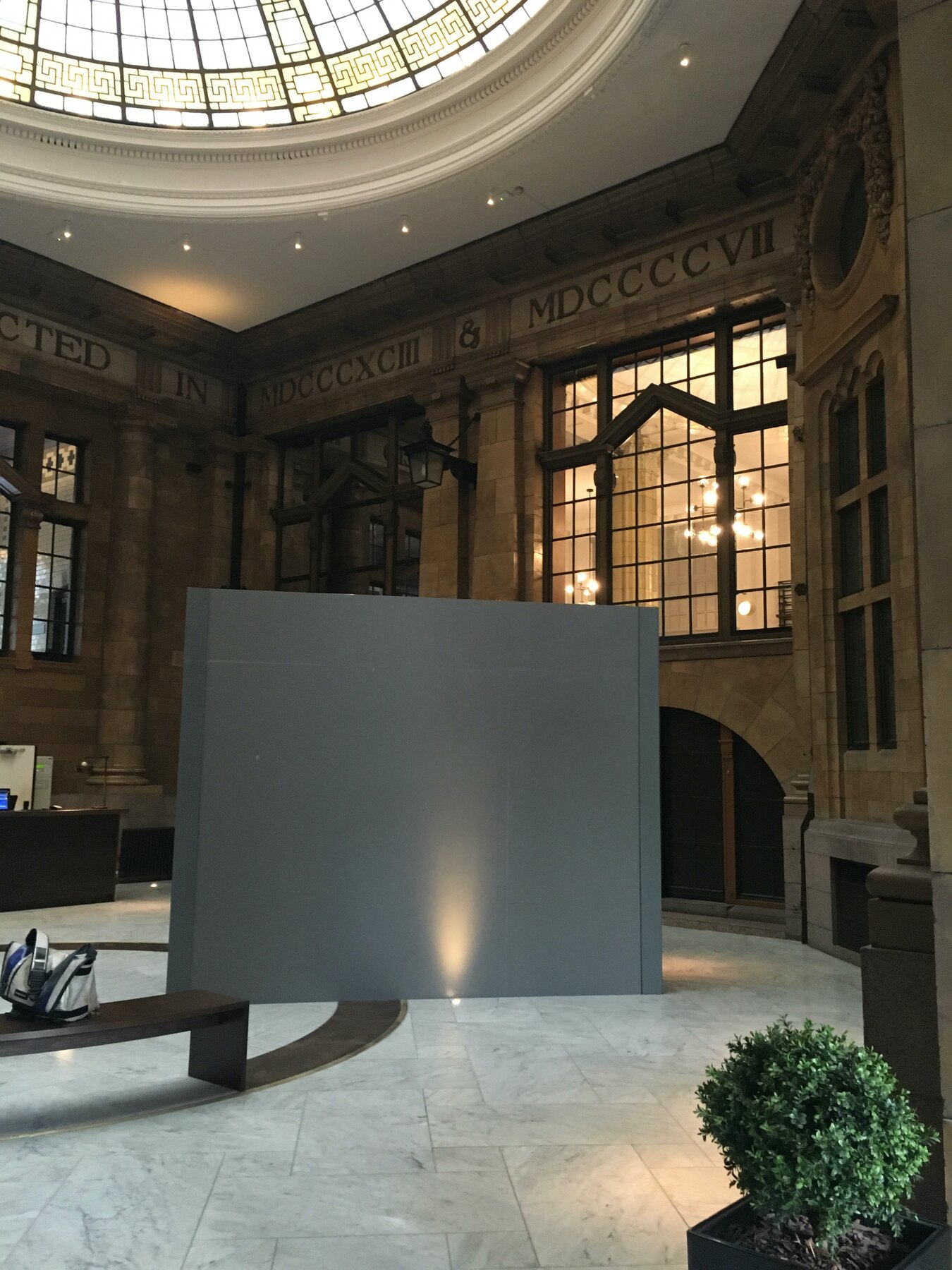
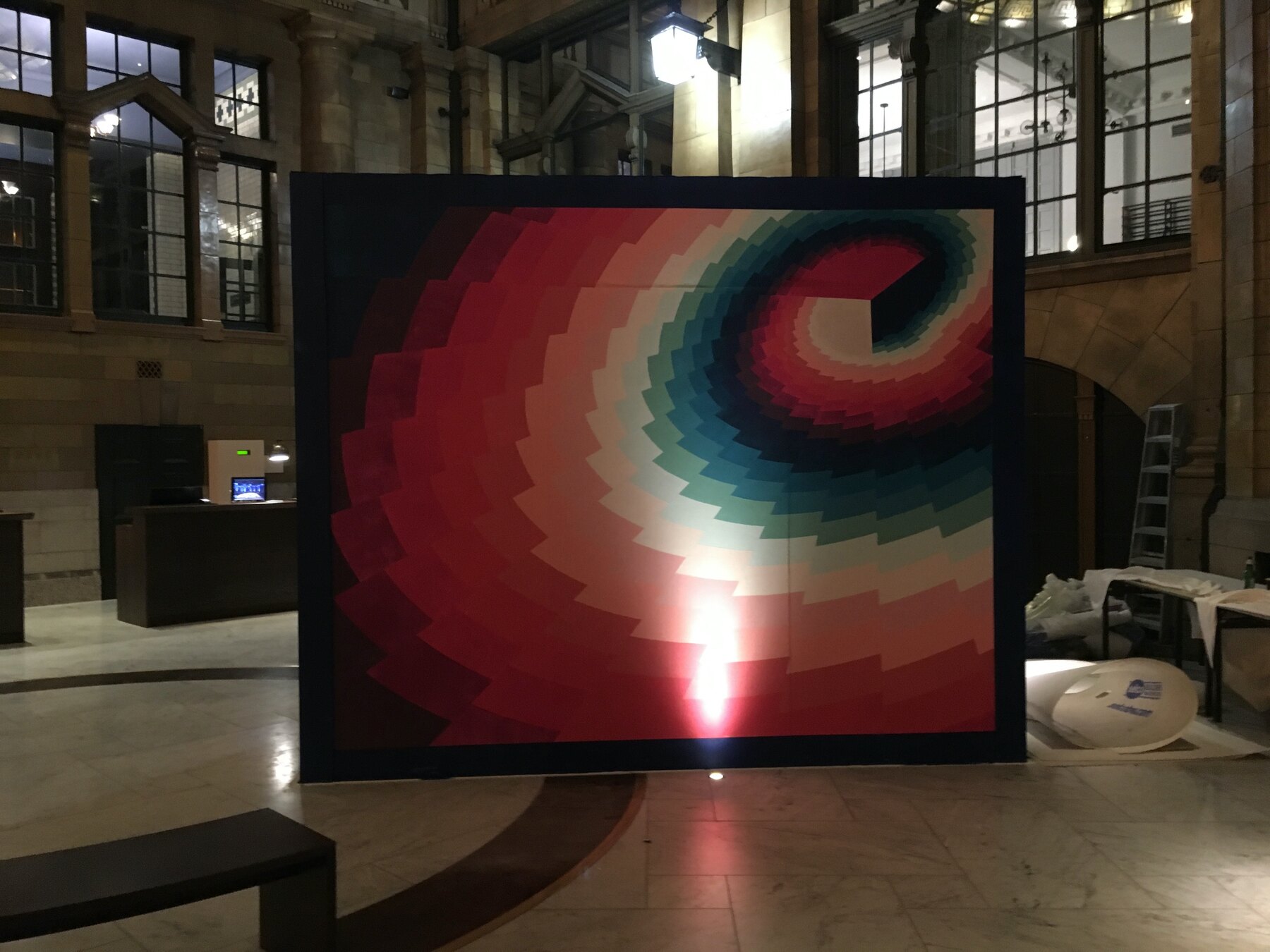
The commission began at a boarded wall. At the first visit in May 2016 the reception was a building site, and the centre of the room was taken up by a large grey hoarding with something hidden inside. The first move was to make it worth looking at: over four days in June, Mark and the painter Jude Wainwright turned the box into a three-sided painting, a colour-step spiral, squares inside squares and a radial burst, translated by hand from screen designs.
It became a photo stop before it was even finished. Guests posed against it all summer, and in July Jody Hartley photographed it properly beneath the dome.

The Hexagon
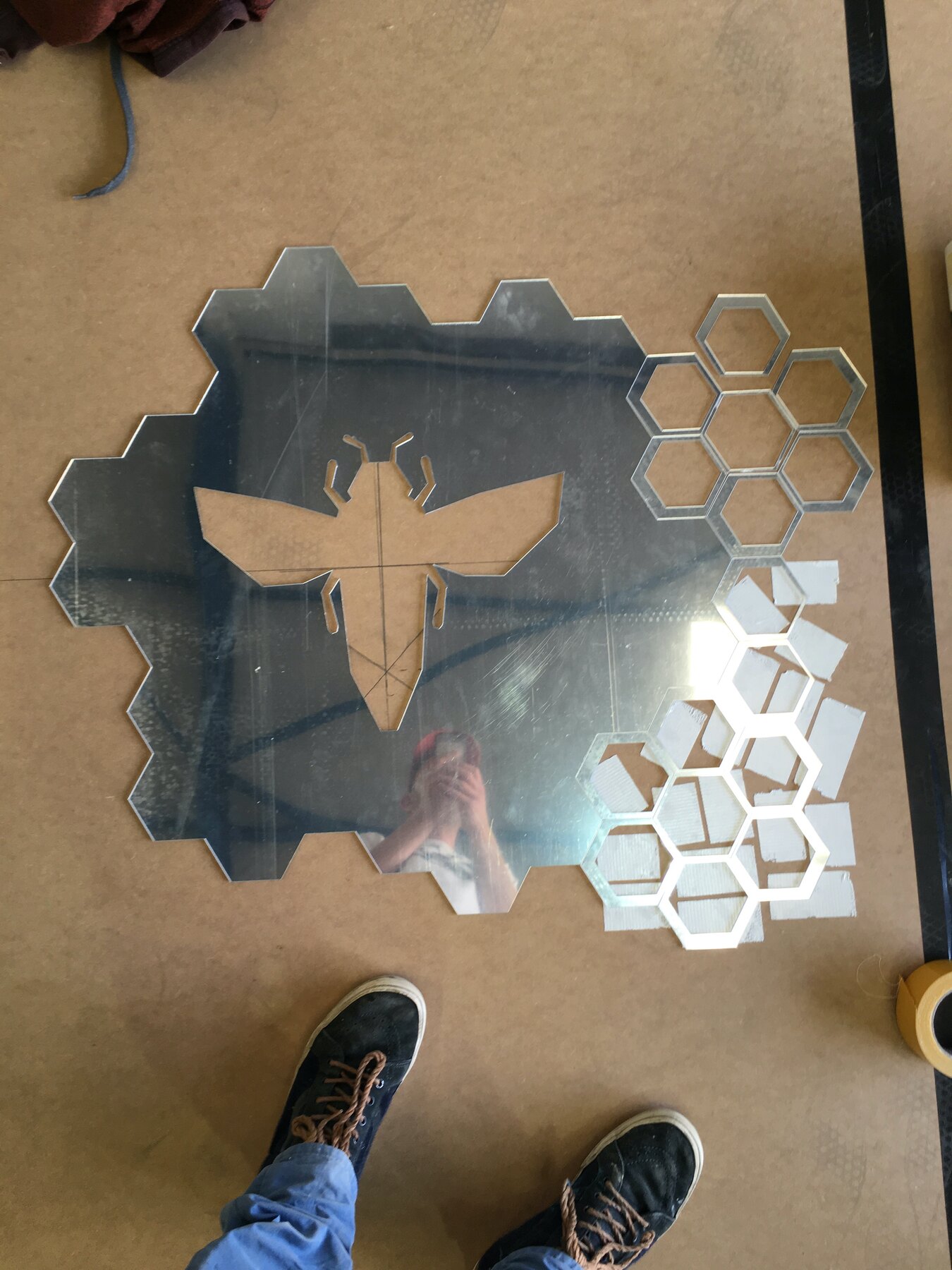
A second mirrored piece takes the form of a large hexagon, laser-cut with a Manchester worker bee at its centre, a symbol used across the city since the industrial era. The bee sits inside a field of mirrored acrylic, designed to catch the light and movement of the room around it.
The hexagons were test-cut in July, hundreds of pieces coming off the laser in trays, then assembled over six days with the bee set at the centre of the field.
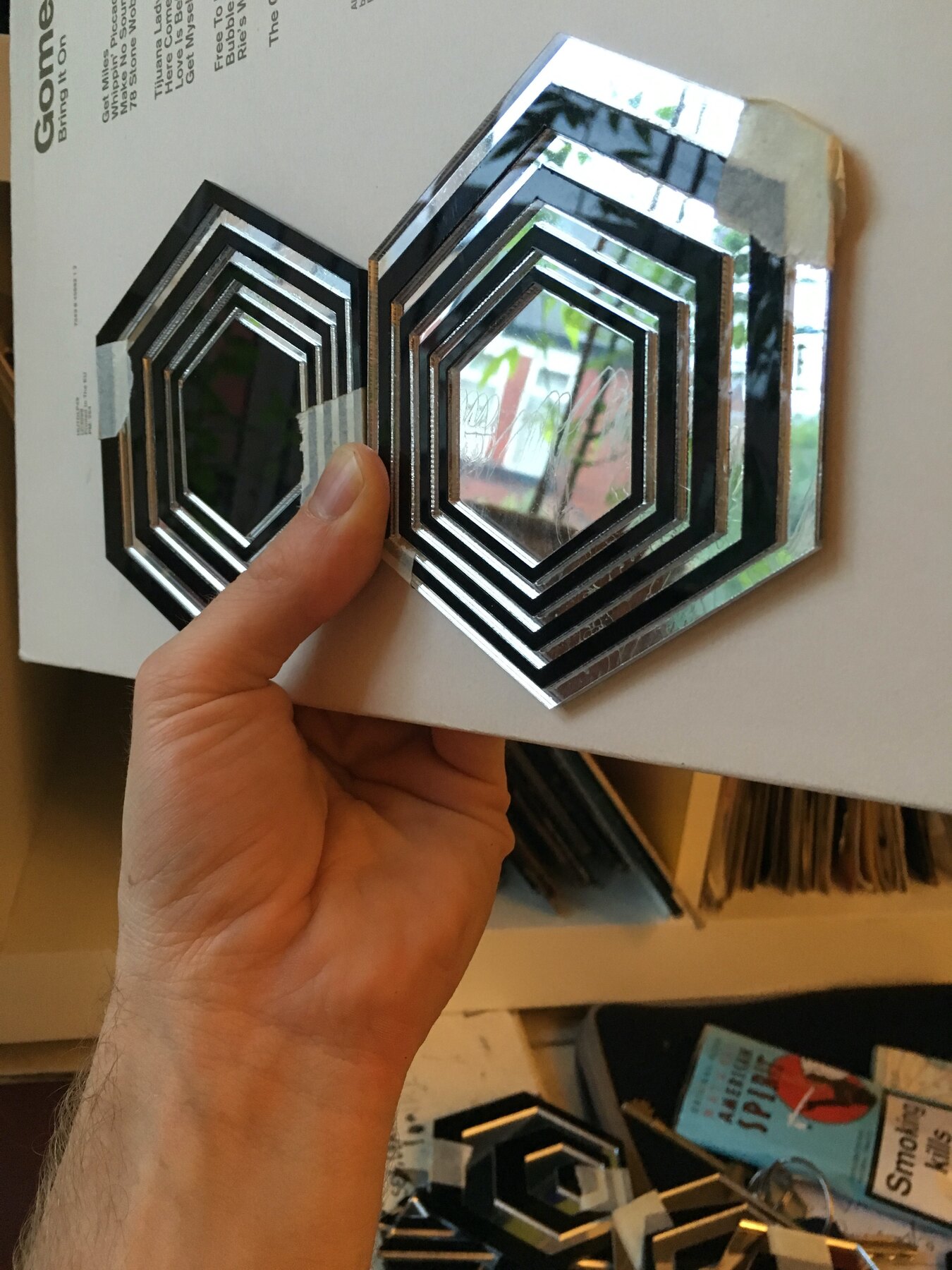
The Mirror Box
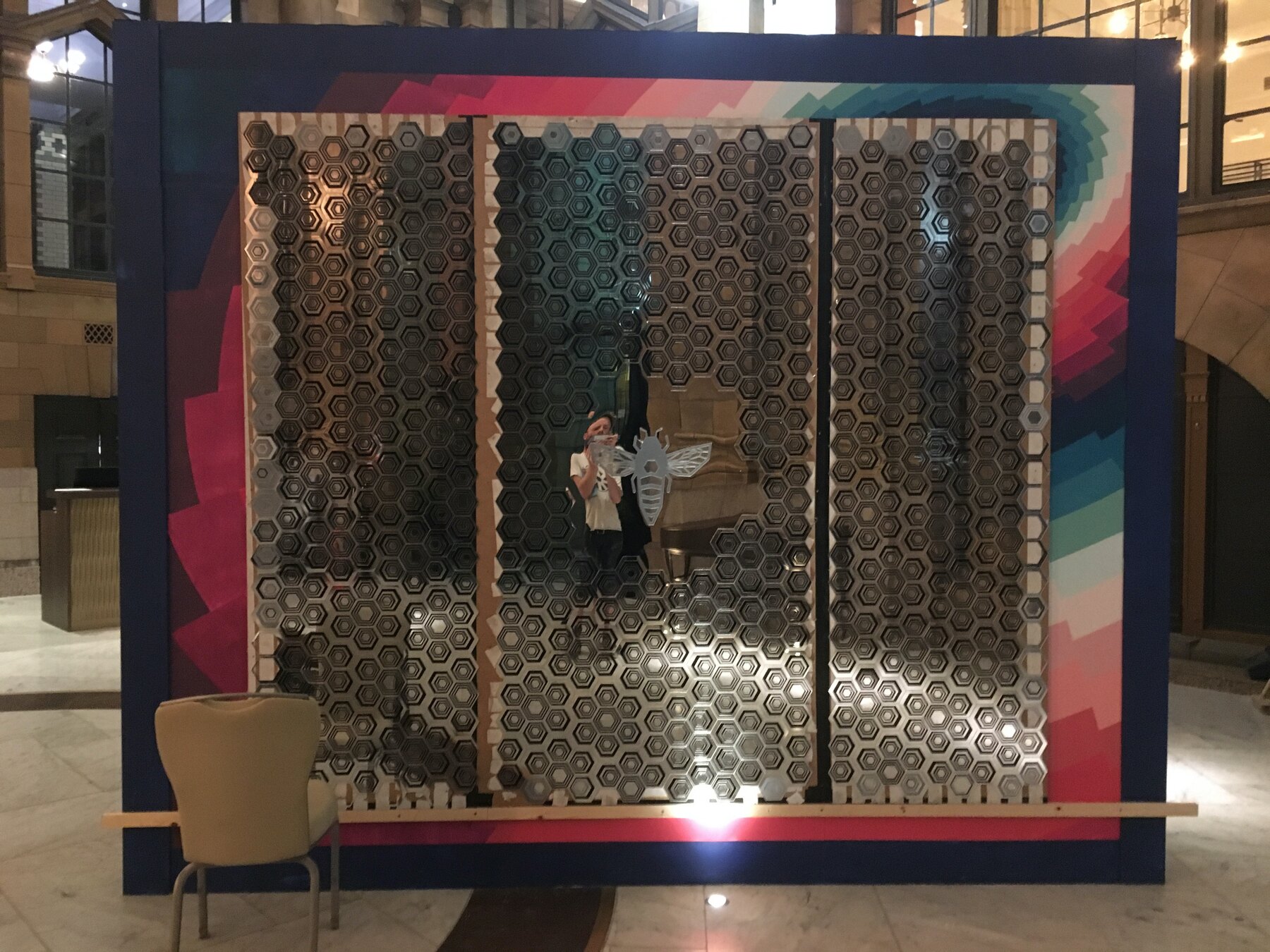
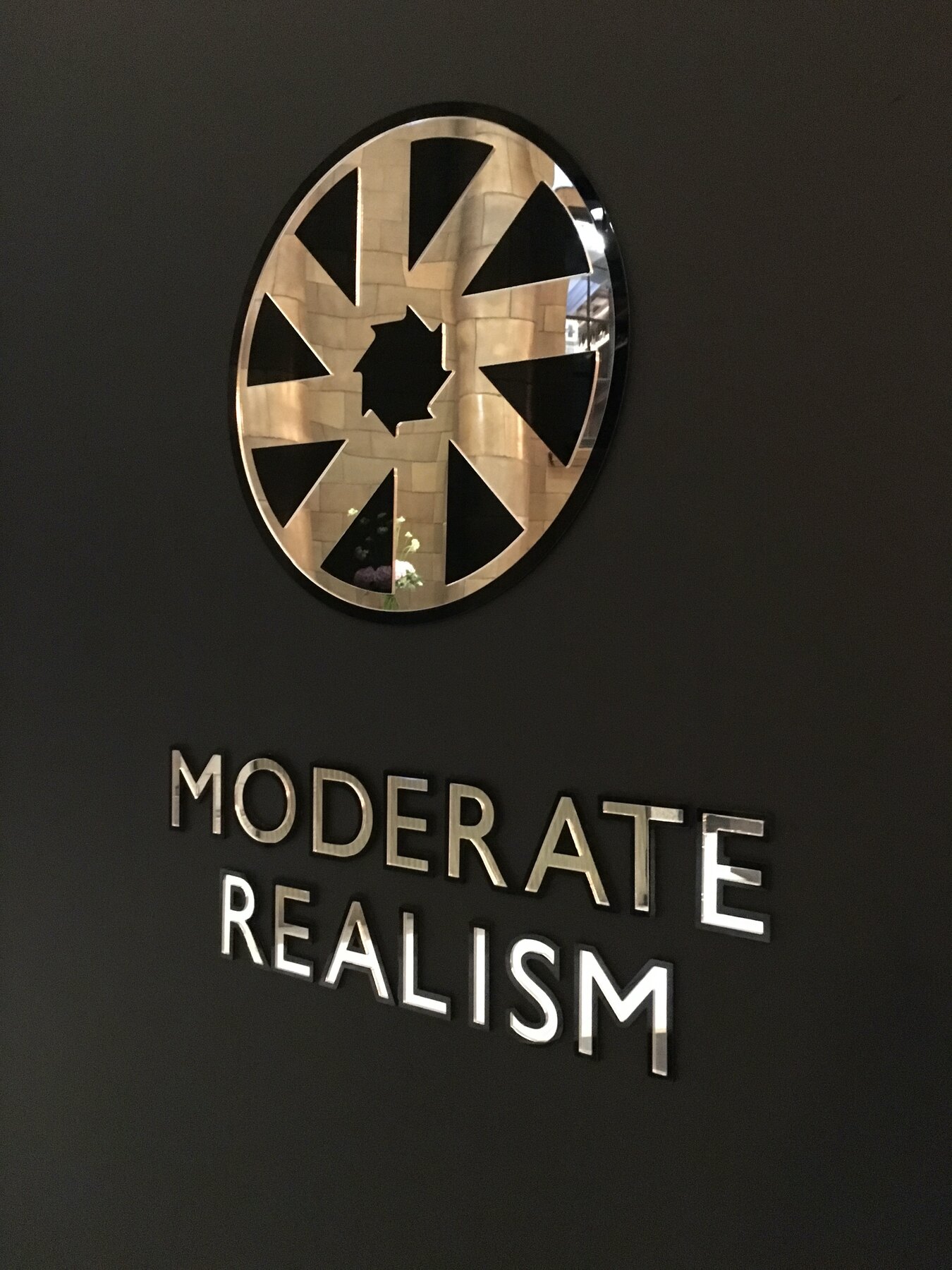
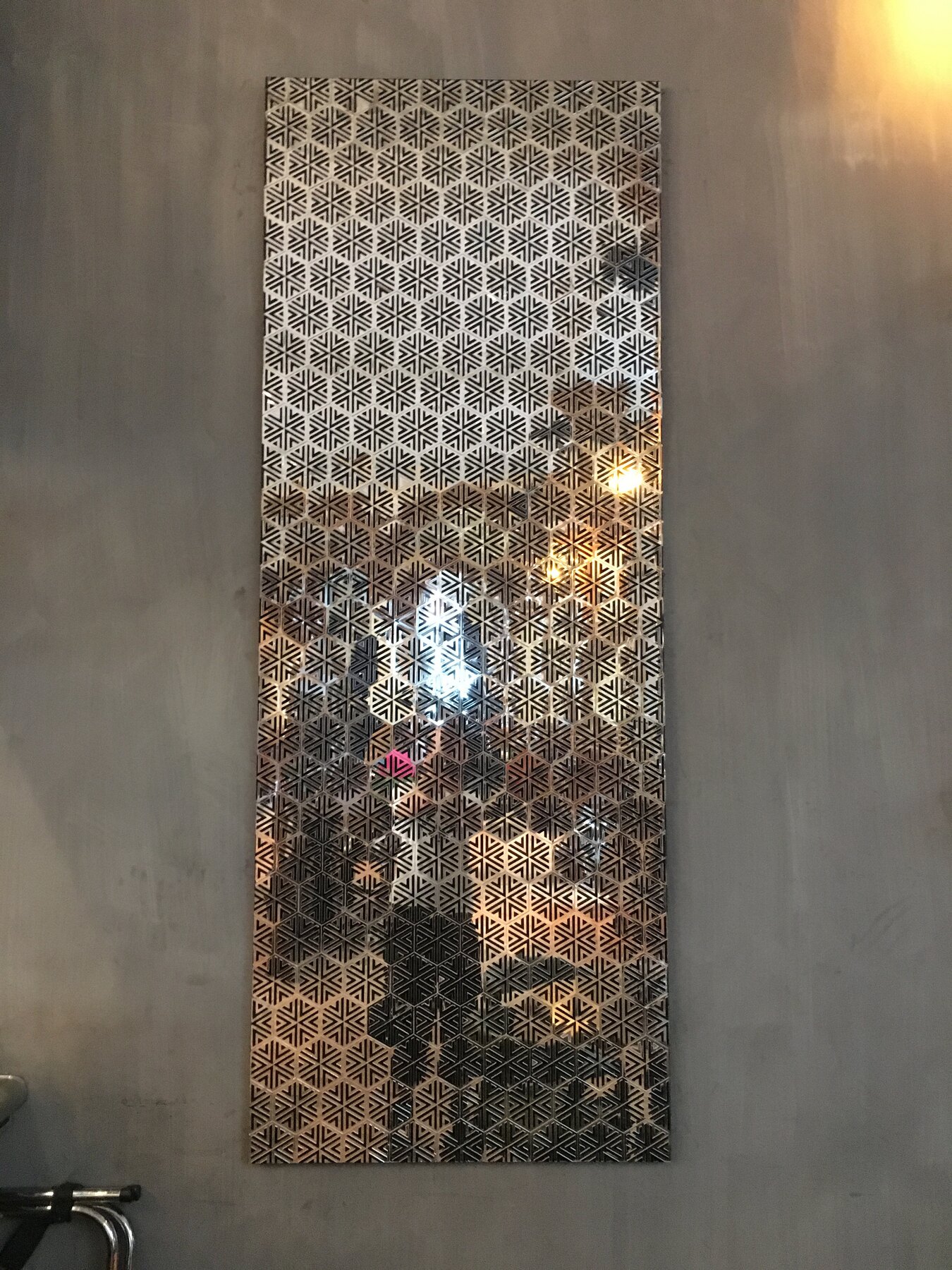
In August the painted skin gave way to mirror. Hundreds of laser-cut hexagons in black and mirrored perspex were assembled into panels on a big empty floor, tessellated tight in the middle and dissolving towards the edges, then fitted over the faces of the box. A black plaque with a gold roundel went up alongside, reading Moderate Realism.
Under the lights the box stopped being an object and became a lens, handing the dome, the arches and the people back to the room.
The Reveal
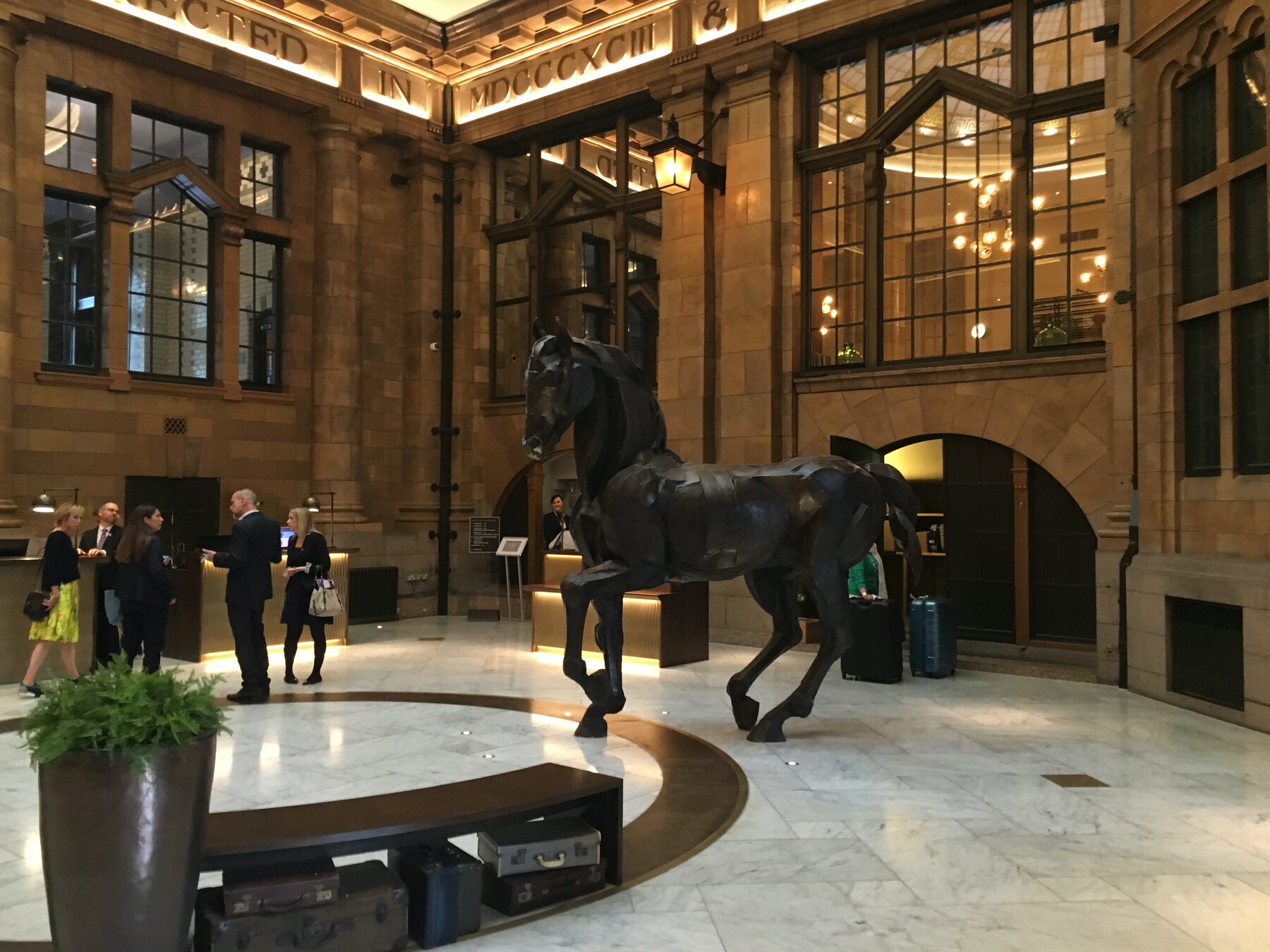
On 12 September the hoarding came away, and a huge black horse stood where the box had been all along. The painted box and the mirrored box turned out to be two acts of a cover for the reveal.
Nothing was wasted. The same day, the mirror hexagon panels moved into the dining rooms of the Refuge, where they have hung ever since.
Still There
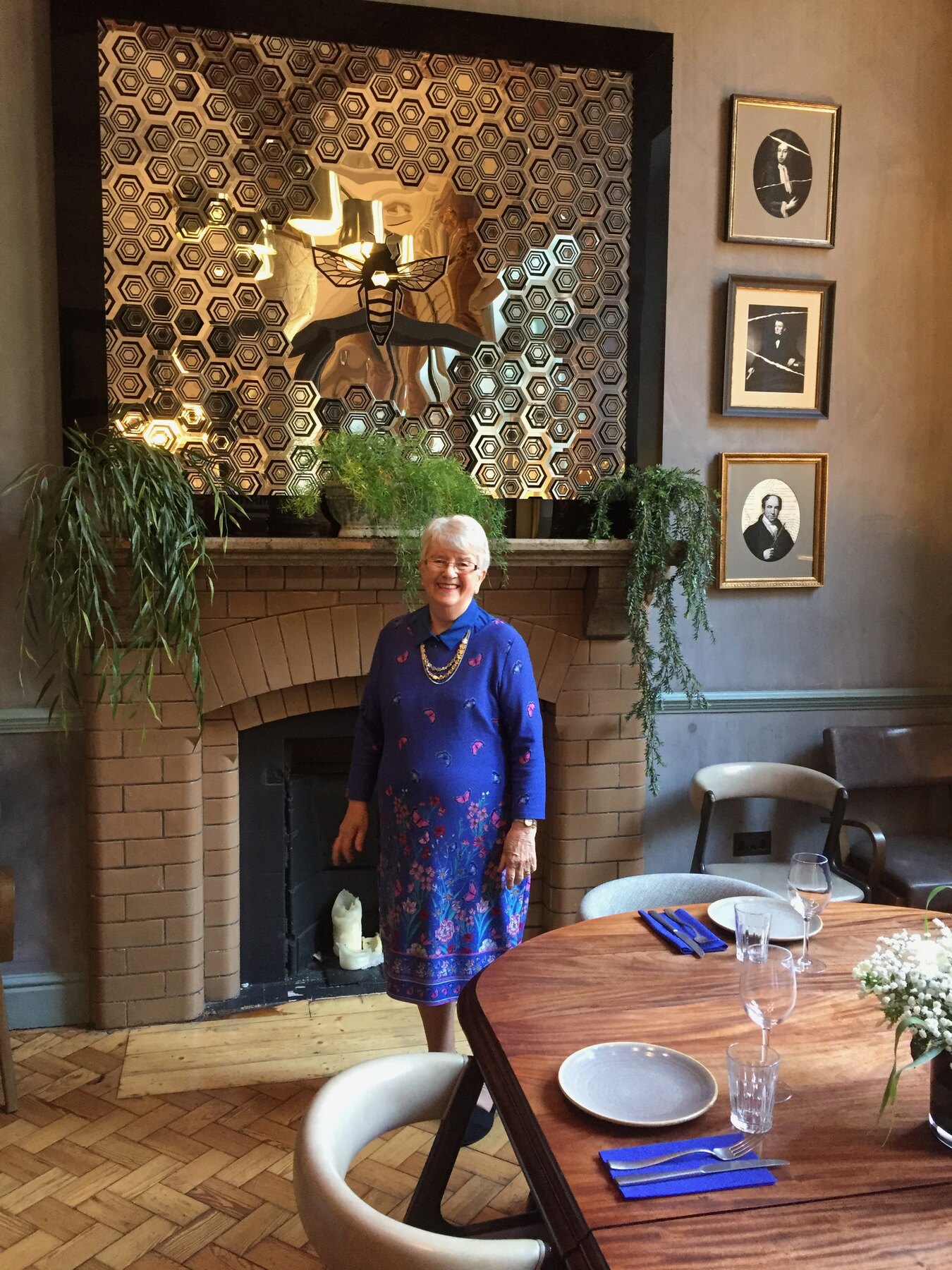
The mirrors settled in. Eight months after opening they were catching the light in the dining rooms, and two years on, Mark’s grandma stood for a photograph in front of the honeycomb panel above the fireplace in the private dining room.
Commission a Similar Project
Mark takes on a small number of commercial and hospitality commissions each year, working directly with hotels, venues and brands who need a permanent installation designed to work at the scale of a building, sitting comfortably alongside existing architecture rather than working against it.
If you are planning an interior that needs pattern, reflection and colour rather than off-the-shelf decoration, get in touch early, while the brief is still open.
Get in touch about a commission →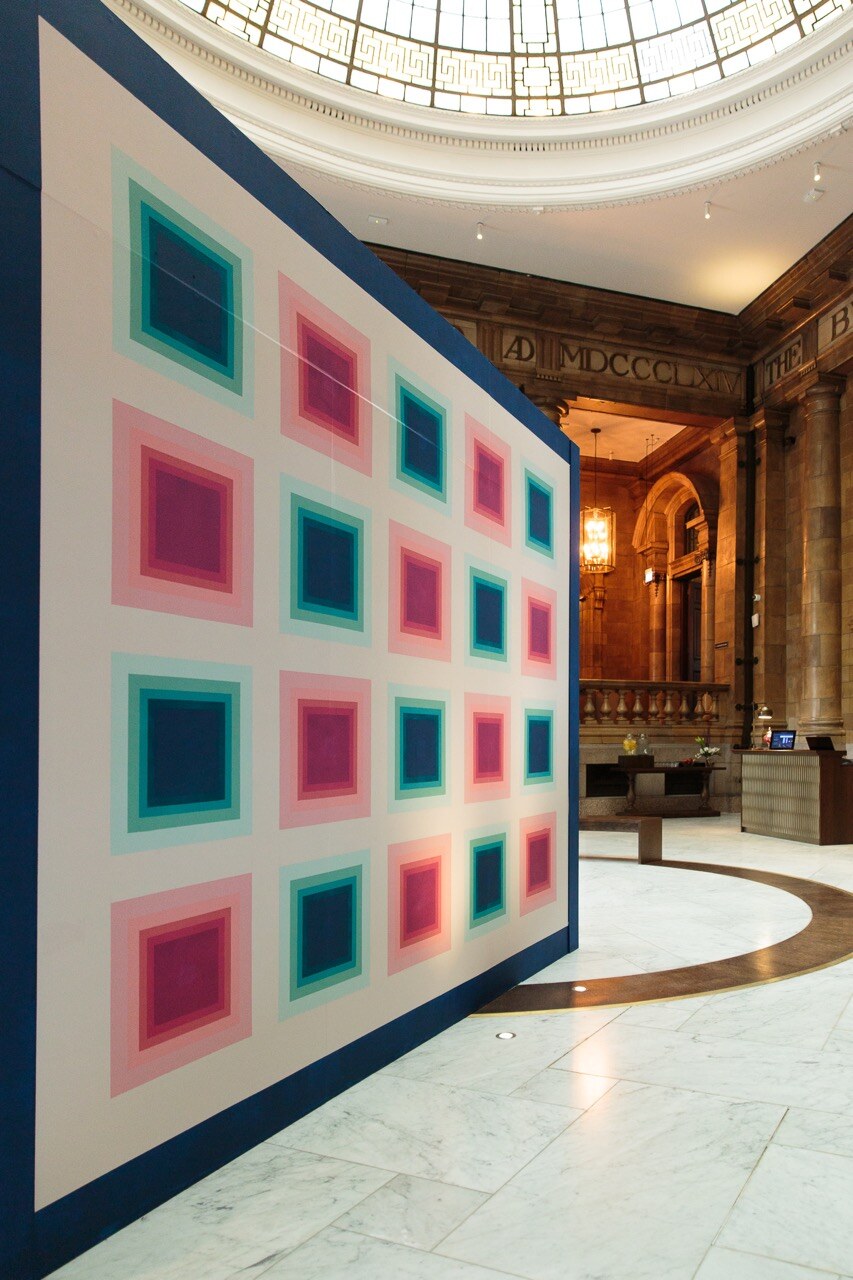
Questions
What was the Palace Hotel commission?
A 2016 commission for the Palace Hotel, now known as Refuge, working with Kimpton Clocktower Manchester ahead of its reopening. The brief was for a permanent acrylic mirror installation in the reception hall.
What is the installation made from?
Acrylic sheet, cut and finished to a mirror surface, then worked into pattern across a freestanding piece and a separate hexagonal panel, including a laser-cut Manchester worker bee.
What building is the installation in?
The former Refuge Assurance headquarters on Oxford Street, Manchester, a Grade II* listed building designed by Alfred Waterhouse, later the Palace Hotel and now Kimpton Clocktower Hotel.
Why a worker bee?
The worker bee is a long-standing symbol of Manchester, adopted during the industrial era to represent the hard work of the city. It was laser-cut into the mirrored hexagon as a direct nod to the city the building stands in.
Was there anything beyond the reception installation?
Yes. The commission ran alongside a separate citywide guerrilla campaign of hand screen-printed posters and wallpaper, and a later exhibition at the newly opened Refuge bar and restaurant. That story is told on its own page, The Palace Is a Refuge.
Can Moderate Studio design a similar installation?
Yes. Mark takes on a small number of commercial and hospitality commissions each year, designing permanent installations for hotels, venues and brands.
From the Journal
Day by Day, as It Happened
Fifteen dated entries follow this commission as it unfolded, from the first meeting in May 2016 to a family photograph two years later.